Creating Dimensional Art with Layered Butterfly SVG Cut Files
In the rapidly evolving world of digital crafting and design, the ability to transform flat digital assets into tangible, three-dimensional objects has become a cornerstone of creative expression. Among the most versatile tools available to modern makers are Layered Butterfly SVG Cut Files, 3D. These specialized digital assets allow artists, educators, and business owners to produce intricate paper crafts that possess depth, texture, and visual impact. This guide explores the technical specifications, practical applications, and creative workflows associated with these files, providing a comprehensive overview for anyone looking to integrate dimensional design into their projects.
The Anatomy of a 3D Digital Craft File
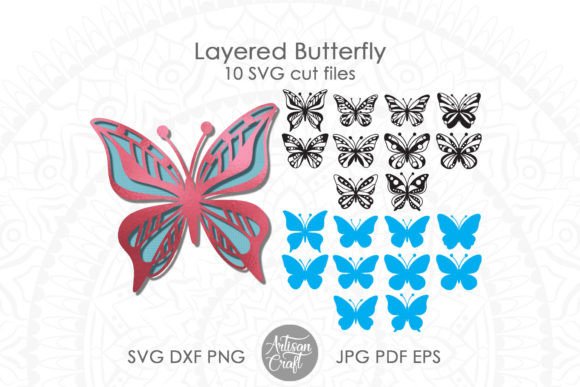
Understanding what constitutes a high-quality layered cut file is essential before beginning any project. The bundle described herein is not merely a collection of images; it is a structured dataset designed for precision manufacturing. At its core, the package contains ten distinct butterfly designs. However, the true value lies in the accompanying solid shapes provided for each design. These solid shapes act as structural supports or background layers that, when attached to the main layered components, create the illusion of depth.
The files are delivered in a compressed Zip folder, ensuring efficient transfer and storage. Once downloaded, users can access a variety of formats tailored to different software environments and hardware capabilities. The inclusion of multiple file types ensures compatibility across a wide spectrum of devices, from personal desktop computers to industrial-grade laser systems. This multi-format approach removes barriers to entry, allowing both novice hobbyists and professional designers to utilize the same asset library without conversion issues.
Technical Specifications and File Formats
The versatility of Layered Butterfly SVG Cut Files, 3D stems from the diverse range of file formats included in the download. Each format serves a specific purpose within the design-to-production pipeline:
- SVG (Scalable Vector Graphic): This is the primary format for die-cutting machines like Cricut and Silhouette Cameo. As a vector image, it scales infinitely without losing quality, making it ideal for precise cutting paths.
- PNG (Portable Network Graphics): Provided with a transparent background, PNGs are perfect for sublimation designs, digital stamping, and clipart usage where layering transparency is required in graphic design software.
- JPG (Joint Photographic Experts Group): These files feature a white background, making them suitable for immediate printing on standard paper or cardstock for physical assembly without needing to remove backgrounds in editing software.
- DXF (Drawing Exchange Format): Essential for CAD (Computer-Aided Design) applications and certain laser cutting software, DXF files ensure accurate geometric representation for non-vector-based workflows.
- EPS (Encapsulated PostScript): Designed for Adobe Illustrator, this format allows for advanced vector editing and manipulation by professional graphic designers.
- PDF (Portable Document Format): Included for easy viewing and direct printing, ensuring that the artwork remains accessible even without specialized design software.
All artwork is rendered at a high resolution of 300 DPI in RGB color space, ensuring vibrant colors and sharp details. The total size of the download is approximately 12 MB, containing a robust library of 51 individual files (10 SVGs, 10 DXFs, 10 PNGs, 1 EPS, 10 PDFs, and 10 JPGs). This comprehensive suite ensures that whether you are designing for print, screen, or physical fabrication, you have the correct tool for the job.
Hardware Compatibility and Production Methods
One of the most significant advantages of using these digital cut files is their broad hardware compatibility. The files are optimized for two primary categories of fabrication equipment: electronic die-cutting machines and laser cutters.
Die-Cutting Machines
Machines such as the Cricut Maker, Cricut Explore, and Silhouette Cameo rely on precise blade movements to follow the vector paths defined in SVG and DXF files. When working with Layered Butterfly SVG Cut Files, 3D, users load the solid shape base first, followed by the layered elements. By carefully aligning these layers using adhesive or scoring techniques, crafters can build up the wings and body of the butterfly, creating a relief effect that mimics real-world anatomy.
Laser Cutting Machines
For more rigid materials such as wood, acrylic, or thick cardboard, laser cutting machines like the Glowforge offer an alternative production method. Laser cutters use light energy to vaporize material along the cut lines. The high-resolution nature of the SVG and DXF files ensures that the intricate details of the butterfly’s wing patterns are reproduced with extreme accuracy. The solid shapes provided in the bundle serve as bases onto which the laser-cut layered pieces can be mounted, creating durable 3D wall art or decorative plaques.
Practical Applications Across Industries
The utility of these files extends far beyond simple home decor. Their adaptability makes them valuable assets in various professional and educational contexts.
Education and Classroom Projects
Educators can utilize these files to teach concepts related to symmetry, biology, and geometry. By having students assemble the layered butterflies, teachers can demonstrate how complex structures are built from simpler components. The process reinforces fine motor skills and spatial reasoning, while the final product serves as an engaging visual aid in lessons about metamorphosis or insect anatomy.
Event Planning and Decor
Wedding planners and event designers often seek unique ways to personalize spaces. 3D butterfly installations can be used as centerpieces, photo booth backdrops, or hanging mobiles. The ability to customize sizes—since the original artwork is 12″ x 12″ but easily scalable—allows for flexible integration into any venue layout. The layered effect adds sophistication and movement to static displays, catching light and shadow in dynamic ways.
Small Business Product Lines
Entrepreneurs running online stores on platforms like Etsy or Shopify can leverage these files to create physical products. From greeting cards and scrapbooking kits to nursery wall decals and jewelry displays, the commercial potential is significant. Because the files are digital downloads, there is no inventory risk until an order is placed, allowing for a lean business model focused on marketing and customer service.
Workflow Considerations for Best Results
To achieve the best results with Layered Butterfly SVG Cut Files, 3D, attention must be paid to material selection and assembly techniques. The choice of paper or material affects the final aesthetic. For delicate, intricate cuts, lighter weight cardstock or specialty craft papers work well. For sturdier 3D structures, foam board or corrugated plastic provides the necessary rigidity.
Assembly requires patience and precision. It is recommended to use low-tack adhesives initially to allow for adjustments before applying permanent bond. Scoring the fold lines of the layered elements can enhance the dimensional look, giving the wings a natural curve rather than a flat appearance. Additionally, experimenting with color contrasts between the solid base and the layered top pieces can highlight specific design features, drawing the viewer's eye to the intricate details of the butterfly.
Conclusion
The availability of high-quality, multi-format digital assets like the Layered Butterfly SVG Cut Files represents a significant advancement in accessible design. By bridging the gap between digital creativity and physical fabrication, these files empower a wide audience to produce professional-grade 3D art. Whether used for educational purposes, commercial products, or personal hobbies, the combination of technical versatility and artistic beauty makes these files a valuable addition to any creator’s toolkit. As technology continues to evolve, the ability to seamlessly transition from screen to object will remain a critical skill, and mastering tools like these is a step forward in that direction.